



–
▷〒906-0011 沖縄県宮古島市平良東仲宗根添1166−287 / MAP
▷WEBSITE : 宮古島市立総合博物館
▷SOCIAL :–
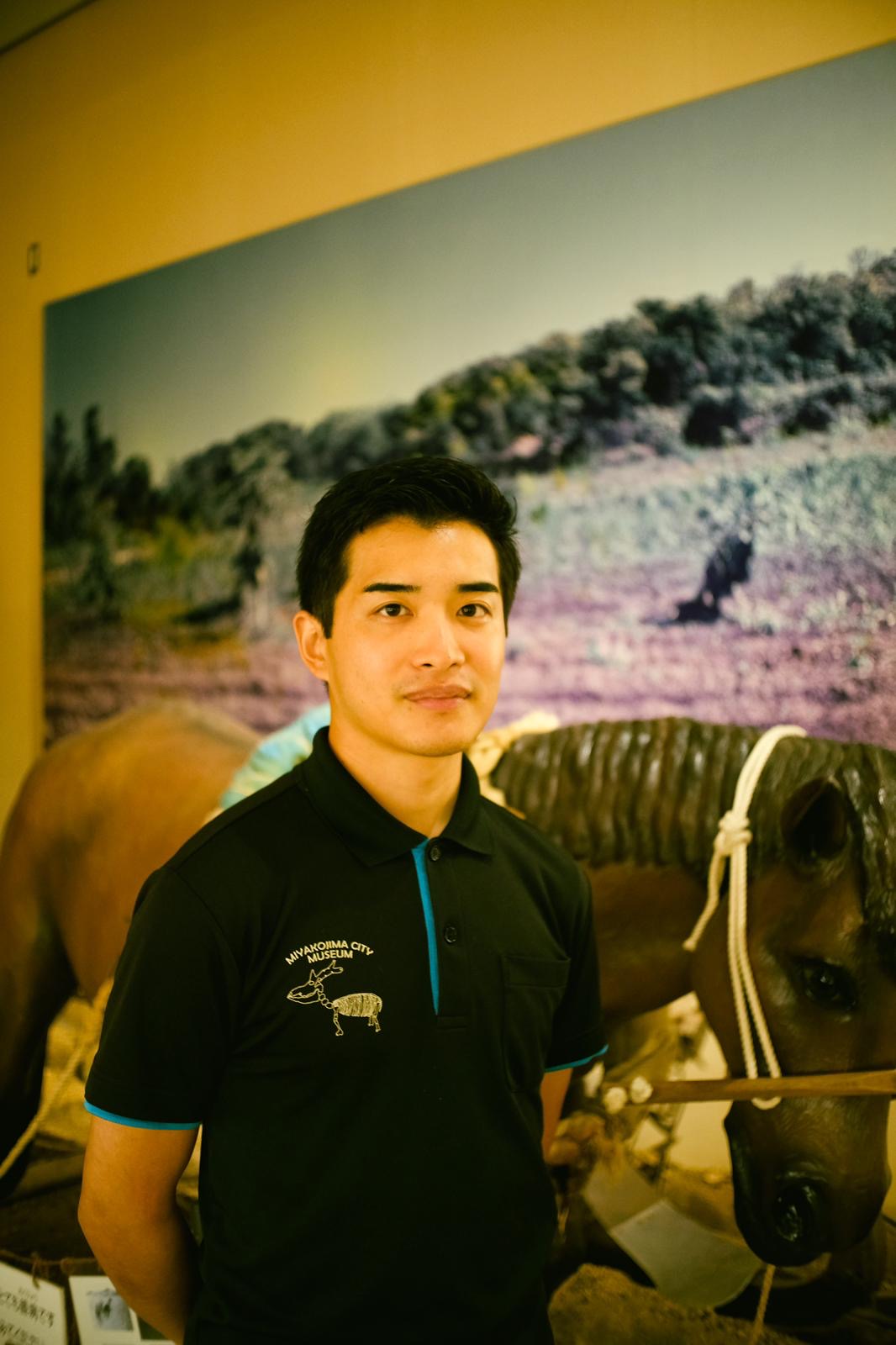
【 宮古島市総合博物館 | 湯屋秀捷 】
「世界の解像度を高めることに繋がるか。いろんな物に触れる。いろんな物を知る。いろんな物が分かる。」
近年、宮古島市総合博物館は話題の特別展示を立て続けに開催している。
その博物館の学芸員のひとりである湯屋秀捷さんは、北海道白糠町の出身。
学生時代には南山大学人類学に進学し、展示資料を直接触れられる独特の学びの場に強く惹かれた。
初めて宮古島を訪れたのは在学中の2017年の夏。名古屋からの直行便を利用し、一週間ほど滞在した。
腰原エリアから島尻集落まで自転車で横断し、そこで出会ったのが厄払いや豊穣を予祝する来訪神「パーントゥ」である。そこの地元の人々との交流をきっかけに関心を深め、現在では島尻青年会にも属している。
就職活動の時期、偶然にも宮古島市総合博物館で学芸員の募集があり、「受けないわけにはいかない」と応募。そして、合格を果たした。
特定分野に依存せず、あらゆるフィールドに関心を注ぐ姿勢が湯屋さんの強みだ。
「学校とは違って、博物館は知識を求めに行くだけではなく、まったく知らないものに出会える場。そうした“面白さ”を体感できる展示の仕掛けを考えていきたい」と語る。島内で博物館の存在感をいかに高めていくかも、常に意識しているという。
湯屋さんの興味の対象は尽きることがない。
文献には載っていないが、実際に宮古島に暮らすことで初めて見えてくる慣習に惹かれるという。
年中行事は沖縄本島とも少し異なり、島内の集落ごとに習わしが違う。例えば、旧盆・迎え日には墓前で焚いた線香の火を家に持ち帰る――先祖を迎えるための独特の風習も、そのひとつだ。
未知の文化や慣習に出会い、それを理解していくこと。
湯屋さんの語る「世界の解像度を高める」という言葉を、少しずつ現実のものにしている。
–
Questionnaire
朝は早起きですか?
> けっこうギリギリまで寝てることが多いです。予定がある時はしっかり早く起きます。
好きな飲み物は?
> 紅茶 / ビール、ワイン
よく使う色は?
> 緑系統
学生時代の得意科目は?
> 社会、国語
何度も繰り返し見た映画は?
> 「紅の豚」 / 1993年 原作・脚本・監督 宮崎駿
本棚で1冊選ぶなら
> 「忘れられた日本人」 / 宮本常一
人類学や民俗学に興味をもったきっかけの1冊。
好きな場所はどこですか?
> 「西浜崎」
干潮時の静けさが好き。
今の気分で1曲選ぶなら?
いつも身につけているものは?
> izipizi(イジピジ)のサングラス
一目惚れで購入。仕事の時はアクセサリー類は身につけない。
毎日のルーティンはありますか?
> 起きた直後、寝る直前にコップ1杯の水を飲むこと。
最近の調べものは?
> ワインセラーのタイプと価格。
アイデアを創出するための方法はありますか?
> 紙に思い付いたことを雑多に書き出して、翌日見直す。
そのアイデアを出力する方法はなんですか?
> ぐちゃぐちゃでも書く。コンピュータを開く前には必ず紙とペンを使う。左利き。
日々の健康のために何か取り組んでいることはありますか?
> 寝るときに体を冷やさない。
仕事をする上で大切にしていることはありますか?
> 世界の解像度を高めることに繋がるか。新たな面白さにつながるか。
いま会いたい人/尊敬する人はいますか?
> 大学博物館の恩師

▷ADDRESS : 1166-287 Hirara Higashinakasonezoe, Miyakojima-shi, Okinawa 906-0011 / MAP
▷WEBSITE : Miyakojima City Museum
▷SOCIAL : –
【Miyakojima City Museum | Hidetoshi Yuya 】
“To Sharpen the Resolution of the World“
“Does this help sharpen the resolution of the world?
Touch many things.
Learn many things.
Understand many things.”
In recent years, the Miyakojima City Museum has continued to attract attention with a series of special exhibitions.
One of its curators, Hidetoshi Yuya, hails from Shiranuka, Hokkaido.
As a student, he majored in anthropology at Nanzan University, where he was fascinated by the unique approach of learning through direct contact with real artifacts and materials.
He first visited Miyakojima in the summer of 2017, during his time at university. Taking a direct flight from Nagoya, he stayed for about a week.
Riding his bicycle from the Koshihara area to the Shimoji district, he encountered the island’s visiting deity, Paantu — a traditional ritual figure that wards off evil and celebrates fertility.
This meeting, along with the warmth of the local community, sparked a deep and lasting interest in the island’s culture. Today, Yuya is also a member of the Shimajiri Seinenkai, which helps organize the ritual.
During his job search, he discovered by chance that the Miyakojima City Museum was hiring a curator.
“There was no way I couldn’t apply,” he recalls.
He did — and was accepted.
Yuya’s strength lies in his curiosity that refuses to be confined to a single field.
“Unlike school, a museum isn’t just a place to seek knowledge — it’s a place to encounter things you never knew existed,” he says.
He hopes to create exhibitions that allow visitors to feel that sense of discovery, while also working to deepen the museum’s presence and relevance within the local community.His curiosity never runs dry.
He is particularly drawn to customs that cannot be found in books — traditions that only reveal themselves through living in Miyakojima.
The island’s annual rituals differ slightly from those on Okinawa’s main island, and even among villages, the practices vary.
For example, during the Bon Festival, some families carry the flame from incense burned at their ancestors’ graves back home — a unique gesture to welcome the spirits of the departed.
Yuya finds meaning in encountering the unknown and striving to understand it.
Through this process, he is steadily bringing his idea of “sharpening the resolution of the world” into reality.
–
Questionnaire
Do you usually wake up early in the morning?
> I often sleep in until the very last minute.
But when I have plans or work, I make sure to wake up early and start the day properly.
What’s your favorite drink?
> Tea — and also beer and wine.
What color do you often use?
> Shades of green.
Your favorite subjects in school?
> Social Studies and Japanese.
Is there a movie you’ve watched over and over again?
> Porco Rosso (1993)
If you could pick one book from your bookshelf, which would it be?
> Forgotten Japanese (Wasurerareta Nihonjin) by Tsuneichi Miyamoto.
It was the book that first sparked my interest in anthropology and folklore.
Where is your favorite place?
> Nishihamazaki.
I love the stillness of the shore during low tide.
If you had to choose one song that fits your mood right now, what would it be?
> BLUE — by group_inou.
What do you always carry with you?
> Sunglasses by IZIPIZI.
I bought them at first sight — it was love at first glance.
When I’m working, I don’t wear any accessories.
Do you have any daily routines?
> Drinking a glass of water right after waking up, and another just before going to bed.
What’s a word or concept you recently looked up?
> Types and prices of wine cellars.
Do you have a method for generating ideas?
> I jot down whatever comes to mind on paper, then look at it again the next day with fresh eyes.
How do you usually express or output those ideas?
> I write — even if it’s messy.
Before opening my computer, I always start with paper and a pen.
I’m left-handed.
Is there anything you do regularly to stay health?
> I make sure not to let my body get cold when I sleep.
What do you value most in your work?
> Whether it helps sharpen the resolution of the world —
whether it leads to discovering something new and interesting.
Is there someone you’d like to meet?
> My former professor from my university museum days.

 dodo meguri